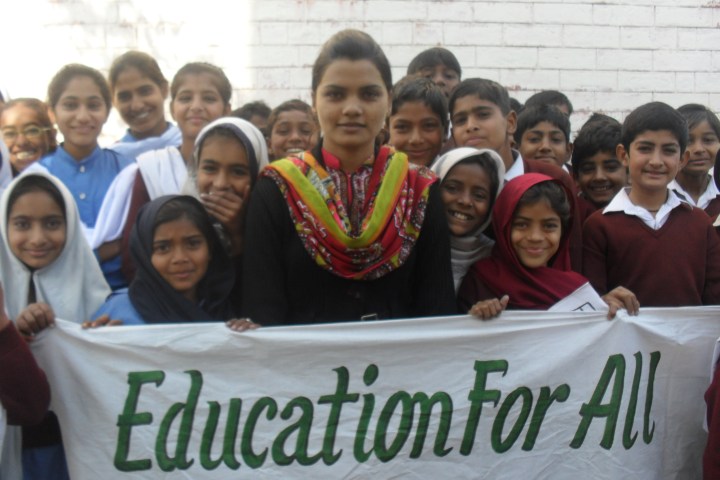
After swearing-in ceremony newly elected prime minister of Pakistan Imran Khan addressed the nation in an unvarnished and unprecedented way. Notably, while talking about poor, widows, and orphans his voice kept changing with deeply grieved face- truly a sign of his honesty. His speech was informal and quite extensive, covering almost all major domestic issues including crippling economy, local and foreign debt, energy and water crisis, inflation and unemployment, pollution and environment. While he purposed the curative measures for some of these challenges, he also pledged to work on enrollment of over 20 million out of the school kids. Here, I would like to share my brief views that could lay the foundation for a general framework of Pakistan’s future education policy.
Phase-I
In the first phase government should immediately declare education emergency throughout the country. Despite that education is a provincial matter; federal government should take all provincial governments on board. Majority of small private schools are paying massive renting costs, they should be allowed to use government school buildings to run evening classes with subsidized rental agreements. A national teaching internship program should be started in which unemployed youth with at least master’s degree should be inducted as teachers for evening classes after short trainings. Through the use of Internet and digital media, distance learning at dedicated places can be used for both adult and juvenile education. Free books should be provided to the student of poor families, and parents who don’t send their kids to school should be penalized as practiced in Scandinavia, particularly Finland. Members of local government at union and village councils should be engaged in school enrollment programs. Religious scholars, imams, and elders of the local communities should be consulted in awareness programs for girl’s education, especially in rural Punjab, Sindh, Baluchistan, and FATA.
Phase -II
As suggested by Dr Atta Ur Rehman, a special “elementary education commission (EEC)” should be formed that can directly report the prime minister and chief ministers. This commission should comprise of veteran educationalists, eminent religious scholars, scientists, and psychologists. The EEC should give recommendations and guideline to Pakistan textbook board in framing future curriculum to meet our national demand and challenges. Similarly, unification of curriculum, crackdown against substandard schools, and recruitment of new teachers should be materialized. Unfortunately, in Pakistan intelligent graduates mostly don’t adopt teaching profession due to low salaries and poor social status. Teaching profession should be made attractive and prestigious with better pay packages and postretirement social insurance. At the same time, teaching profession should be made more competitive with rigorous selection criteria such as high CGPA at bachelor and master’s level, high scores in relevant subjects, and essential personality traits such as communication and listening skills, and congeniality.
Thinking out of the box
A national centre for talented youth should be formed to identify and develop academically advanced so-called “gifted children”. These ingenious children and their families should be financially supported and served with all necessary career counseling. US center for talented youth at John’s Hopink University have served thousands of brilliant minds around the world including founders of Facebook, Google, Intel and Rhodes Scholars.
There are roughly 2.5 million students, mostly from poor families studying in religious schools (Madrasa), almost completely isolated from mainstream schools and colleges. With the consultation of religious scholars, these students should be exposed to subjects like science, computer, and mathematics. It is worth mentioning here that the curriculum of Dars-e-Nizami (Madrasa system in subcontinent between 1750-1920) was remarkably enlightened with over 30 books related to grammar, philosophy, mathematical logic, theology, medicine, and astronomy, while one and two books on sunnah and Quranic exigencies, respectively. During the colonial time this curriculum was deliberately watered down, resulted in scarcity of great scholars, thinkers, philosopher and rationalists from Muslim India. The biggest challenge of today’s Muslim world is the alienation of scholars of modern sciences and religion from each other. With the unified system we can expect that in future our doctors, engineers, and scientists will have better understanding of religious text and Islamic philosophy while religious scholars will embrace the true understandings of scientific enterprise. In the longer run, these reforms will help in reducing distress, extremism and polarization from the society.
According to Pakistan bureau of statistics over 3 million people in Pakistan suffer with various kinds of disabilities, most of them living under deplorable conditions. Unfortunately, rehabilitation, education and social welfare of these people never remained the priority of any government, except general Zia-ul-Haq whose daughter Zain Zia had impaired hearing. In 1981 general Zia issued a special ordinance (XL-1981) for employment and rehabilitation of disabled people, several important amendments introduced later but all turned out to be plain vanilla. Current government should enforce this ordinance at federal, provincial, and district levels to ensure that the people with disabilities will get equal opportunities for learning and education. Full implementation of UN convention on the rights of person with disabilities, which was signed and ratified by Pakistan in 2006. Through a nationwide awareness campaign government should ensure no discrimination, equality of opportunity, equality between women and men, effective participation in society, accessibility, respect for children and adults with disabilities.

Pakistan is in dire need of a dedicated TV channel for education, training and career counseling of our young brains. Government should facilitate PTV to initiate programs that explores various scientific discoveries emphasizing how cutting-edge research in biotechnology, drug discovery, computer engineering, space sciences, and other fields have revolutionized the human civilizations. Local scientists should be invited in these programs to nourish the culture of quest for knowledge in common people through evidence-based science.
 Shahid Rehan