Mukshpuri is about 2800m (9200ft) mountain in Nathia Gali and is the second highest peak in the region after Mirajani (3000m, 9800ft). When I was in my high school in late 90s one of my uncle and his friends went to Mukshpuri. Ever since then I was planning to go there as well but due to study and work abroad I never had an opportunity to hike around thick pine forest of Galiyaat. Recently, I saw several social media blogs and Facebook posts and tweets about Mukshpuri. Being local and climatized for several weeks in Abbottabad and Biran Gali, I finally decided to go there.
Ariel view of Mukshpuri peak. Downhill Dunga Gali bazar can be seen. Picture taken with DJI Spark.
How and when to go:
Whole Galiyat generally and Nathia Gali and surroundings particularly are accessible throughout the year though recommended season for Mukshpuri is between April and October. Galiyat receives massive snow during peak winters and therefor I would avoid trekking during December-March. My favourite time is either May-June or Sep-Oct. During July-August you may have poor visibility due to clouds. If you are traveling with your own car it takes about 2 hours from Abbottabad, road is in excellent condition but often gets slippery due to rain and have dangerous turns. Some turns between Abbottabad and Nathia Gali are very notorious and have taken several lives. Drive carefully without burning your butts! You can also drive directly from Islamabad, leave early morning, park in Dunga Gali. There is a newly built road (about 1 Km) upwards from Dunga Gali, you should drive up there. This will save your calories. There is no free parking but you can get one with Rs 200-250. At the start of trek you need to pay small entry fee.
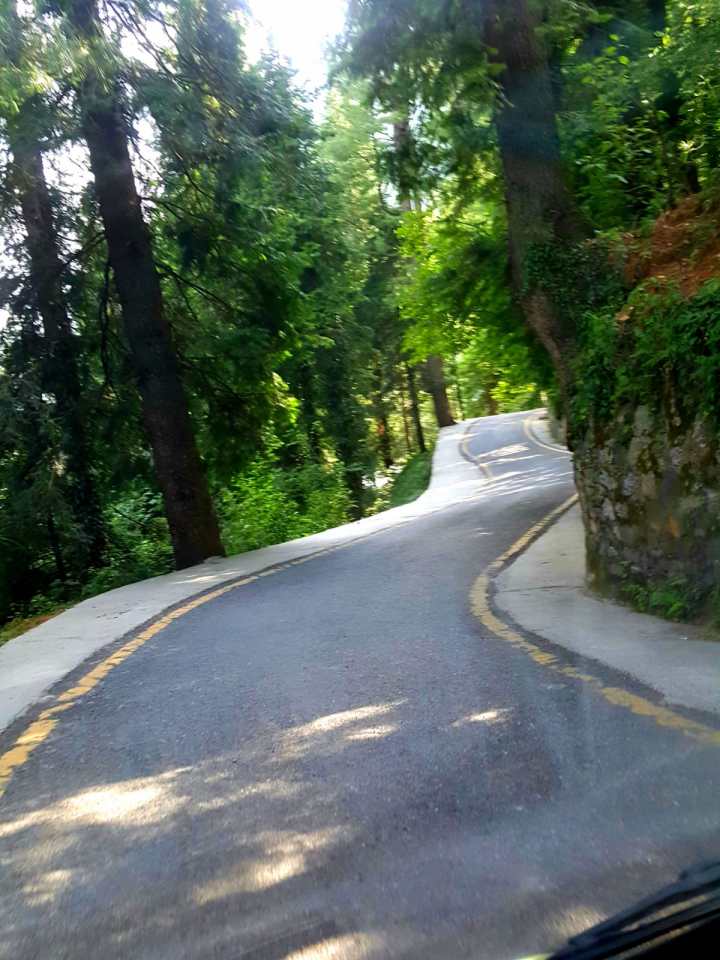
Entrance gate at Dunga GalitionRoad from main Dunga Gali bazar upwards
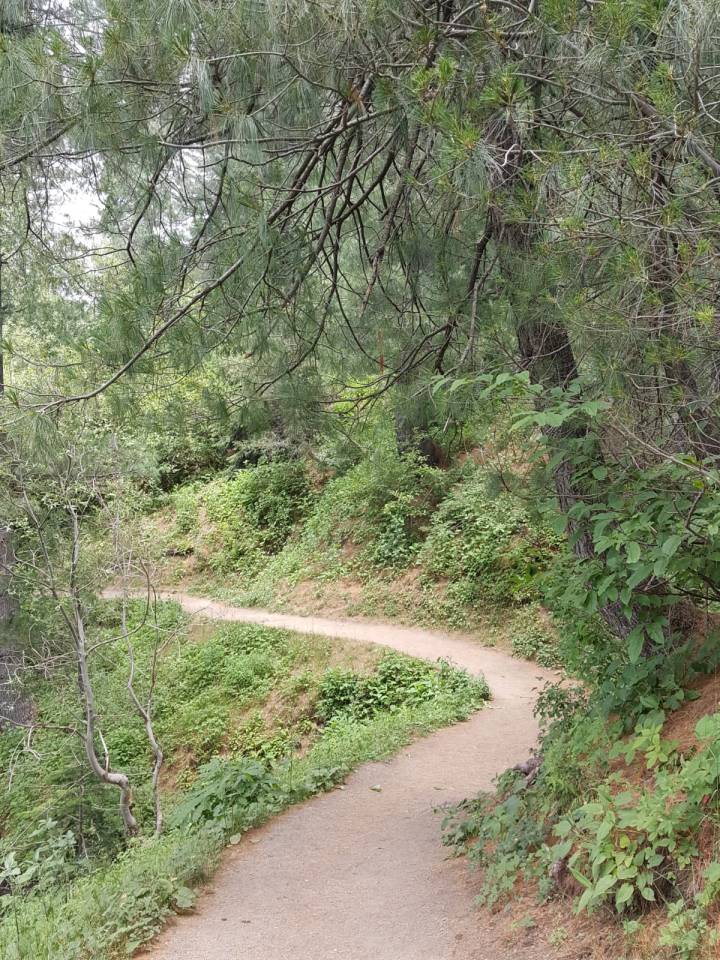
This trek is very well maintained and track is not very steep. Total one way distance is 3 Km. Depending on your speed and stamina trekking time varies. We hiked up in 70mins with two 5min breaks. Taking small children is not recommended unless you can carry them up. We dared to take our 2 year old daughter with us!!! I recommend starting the trek no later than 1:00 PM, earlier is better.
Track leading to Mukshpuri peak.
What to take with:
Water at least 1 litter per person.
Food and snakes
Sunglasses and sun protection lotion
Sun hat.
I highly recommend trekking sticks, your can bring your own or take on rent at the gate (Rent is Rs 50).
Camera and related gears
Pain killers
Mosquito repellent spray or lotion.
Hiking shoes
What to do there:
Mukshpuri is very photogenic place. On a clear day (usually in May-June) you can spot several villages of districts Abbottabad, Nathia Gali, Ayubia, Mirajani, Muree, Kahota, and even AJK including river Jhelum. Place is spectacular for photography and even walk (if you can do it after long hike). Camping is possible but I am not sure if it is allowed by wildlife department as the area is surrounded by thick forest and there is risk of wild animals. If you plan to camp at the top take at least 8-10 people and double check the forecast.
Final word:
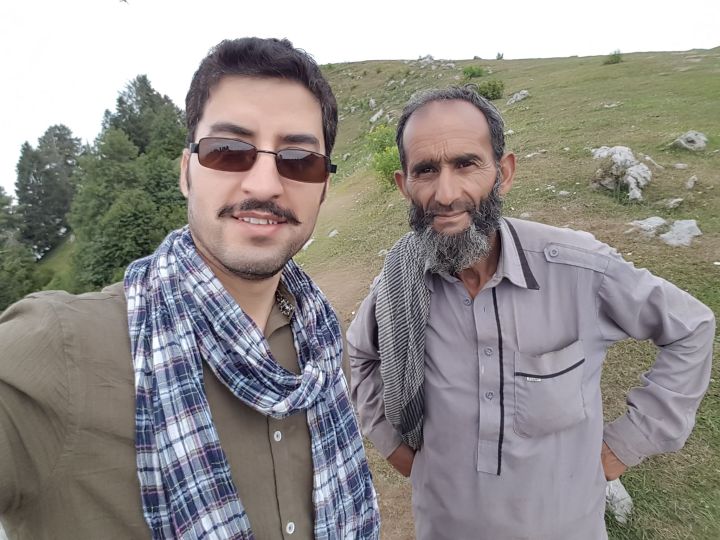
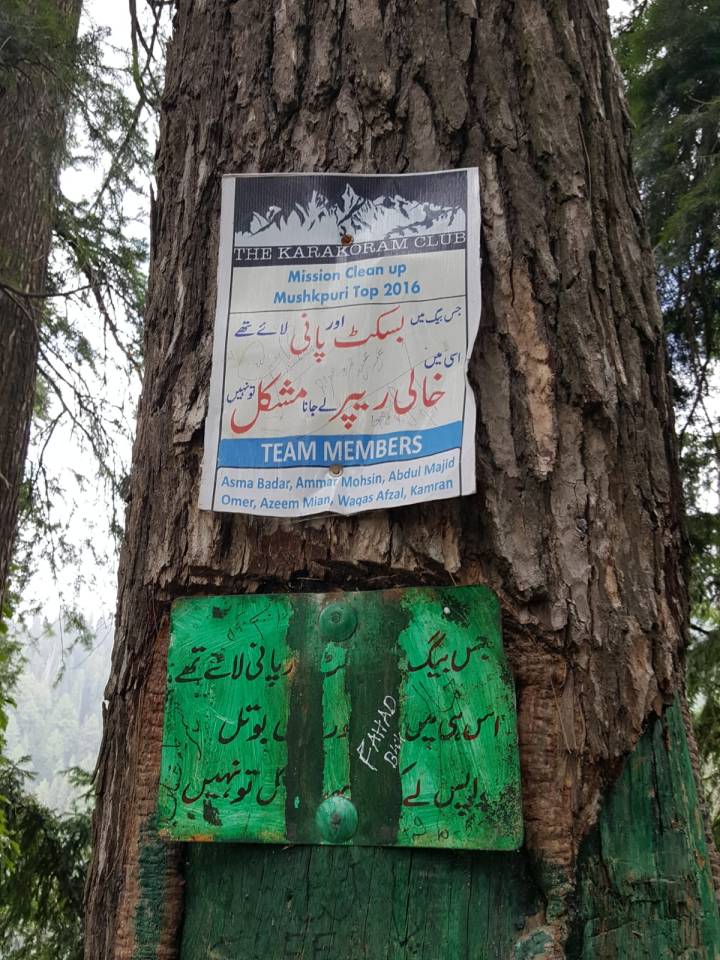
This is a highly recommended place for young people, groups, families and couples. The peak is very similar to Seri-Paye in the Shogran region of KPK with much more convenient and accessible track. KPK tourism and wildlife department has maintained the whole region very well. There are several litter boxes and even staff taking care of plastic and food waste. Chacha Bashir is one of the locals hired by the wildlife department to keep Mukshpuri clean for you. I hope you will maintain the civic sense and responsibility and protect the environment for your coming generations. Have a wonderful trek!!!!
Chacha Bashir, a local man maintaining Mukshpuri peak clean and tourist-friendly.Please protect the environment.
Higher education has never remained focus of any governments in our 70 years history. Apart from some of the selected centres that come under the umbrella of Pakistan’s nuclear program, most of the institutions are marked as mediocrity with no motivation for real science and knowledge. In year 2002, Pakistan’s higher education commission (HEC-reincarnation of the erstwhile university grant commission) was established. HEC is an autonomous apex body responsible for funding and evaluation of research activities along with degree accreditation powers.
During its early days HEC had changed the culture of scientific research through several innovative programs including capacity and infrastructure building of universities, faculty development programs and overseas scholarships. In the year 2008, Nature commended HEC’s efforts in its editorial calling it “silent revolution in higher education”. However, despite adequate fundings, reforms and policy changes critics argue that HEC is failing due to systematic flaws, merit violation, favouritism and political manipulations. Excessive centralisation, lack of external evaluation, rigorous accountability and no transparency have further diverted HEC in creating an open scientific culture based on quality and knowledge.
HEC claims success with establishment of over 150 new universities, 500% increase in number of publications and an improved international ranking of Pakistani universities. With rote-learning and below average research outcomes, most universities merely serving as feeding platform for international institutions. HEC funding are based on a scientist’s cumulative personal impact factor. This means that the scientist has to accumulate an impact in any way possible (publish 100 papers with impact factor 1 rather than couple of quality papers). This has nourished the culture of “paper mafia” where colleagues and friends, often from different research backgrounds share authorships in order to get funded and promoted. This also raises the question of what authorship entails. The US National Institutes of Health has given the guidelines on the activities that qualify: active mentoring, designing and doing experiments, and data acquisition and analysis plus drafting the manuscript. Collecting funds or distant supervision do not qualify to become an author. On the other hand, it is inherently difficult to publish in some research fields; for example in structural biology, while relatively easy in areas such as human molecular genetics, population genetics, and other studies involving large data sets. How can one fairly evaluate such different fields with the same yardstick?
Similarly, HEC sponsored foreign PhD fellowship programme for over 3,000 scholars to study abroad in world’s top universities. While the impact of overseas program was yet to be seen, HEC started a rather larger indigenous PhD program at local universities. Local faculty members got strong financial incentive for these students and universities were inundated with PhD aspirants. Faculty members recruited dull students-compromising quantity over quality and the positions that were to be filled by the overseas scholars occupied by local PhDs with the help of their supervisors. Every second university across country lacking research diversity because MrX, MrY, and MrZ who all did PhD under Mr.A are now working in the same department, and even on a same research theme-a perfect combo for sharing authorships and incentives from HEC.
A friend did PhD from Europe’s top institute and is now surviving in one of the Pakistani university as a associate professor. His Rs 10 million funding proposal was returned back by HEC with the objection that only Rs. 2 million can awarded, provided the project is modified accordingly. This clearly shows the lack of skills and expertise to carry out effective evaluation and decisions making. The chronic funding and lack of infrastructure is not the only problem but the attitude, scientific misconduct and the violation of research ethics are perhaps even more serious issues. For instance, The Hussain Ebrahim Jamal Research Institute of Chemistry (HEJ) has everything; funding, labs, infrastructure and people, yet they are not producing cutting-edge and international standard research. There is an explosion of papers published from the institute, however none reach any of the really good journals. No one apparently goes for excellence but rather stick to quantity which is what matters for HEC. Not to mention that this culture has flourished under the patron-in-chief and former head of HEC Professor Dr Atta-Ur-Rahman,and has been adopted by a lot of other institutes in Pakistan.
Dr. Rehman is revered by many young scientists, including myself, for his scientific excellence and remarkable work for higher education in Pakistan. But I believe there are several areas where his policies failed miserably or his inactions resulted in scientific culture with minimal quality, diversity and directionality. Science globally has changed significantly and Pakistan needs a new team of game changer scientists who can take things to an international level. Instead of father figures, we need teams of dedicated people, likely overseas, who are paid to do a job and don’t get anything else but the pay; no recognitions, awards, pictures in newspapers and tv, buildings with their names etc.
PTI government announced that prime minister house in Islamabad will be converted to a new university. There are already 8-10 universities in twin cities, do we need yet another university? If the new university is to be build and run under same HEC models, it may turn out to be a failed political stunt and a total waste of resources and opulent space. However, this may be a unique opportunity for the current government to introduce new, bold and out of the box solutions and reforms to fix our higher education sector. Here, Pakistan should seek help from China in establishing international standard university, possibly under CPEC program. This university should only offer research programs (PhDs and post PhD) in selective fields; such as biotechnology, nanotechnology, space science, information technology, religious philosophy and human history. The university should be generously funded as our nuclear program was funded in 70s-80s. On the defence day, COAS general Qamar Javed Bajwa has also pledged to support political government in eradicating poverty and illiteracy. I am sure he is well aware that our rivals; India and Israel spent 1% and 4.3% of their GDP, respectively, on research and development, unlike our deplorable figure of less than 0.3%.
The new university in Islamabad (say National University of Pakistan, NUP), should be run on new model, more like The Swedish academy of sciences or academy of Finland. NUP should have a board of governors (BoG) consists of international scientists who can directly report to prime minister and education minister. Four research councils each for natural sciences and technology; social science and humanity; bioscience, health and environment, and religion, should be made. These councils should have 4-5 research-active scientists from Pakistan and abroad recruited only on temporary rota of 2 years. These people should be accessible to students, researchers and scientists of NUP in all possible ways. Alternatively, four centre of excellence (CoE) in aforementioned areas could be established with the help of international scientific community. Each of these CoE should have certain percentage of foreign experts to foster and maintain quality of this scientific enterprise. Foreign faculty should be hired like Chinese did in Tsinghua university. An international scientific advisory board (SAB) consists of imminent international scholars should regularly evaluate the performance of research faculty and report to BoG. For effective transition of knowledge and expertise from international scientists to our own students, a special postdoctoral program for Pakistani scientists should be started at NUP. Study model of Swiss Federal Institute of Technology (ETH) should be implemented which allows maximum of 8 years of study in the same institute that includes degree, doctoral and postdoctoral. No one should be allowed to become faculty member if he/she has completed the doctoral degree from the same institute unless he/she spends at least 2 years as faculty member or postdoctorate elsewhere. Like elsewhere in Pakistan, women representation, particularly at policy levels should be ensured. If the NUP model works, it should be extended to other universities with major reforms in HEC-particularly decentralisation of power, external evolution, quality assurance and transparency.
After swearing-in ceremony newly elected prime minister of Pakistan Imran Khan addressed the nation in an unvarnished and unprecedented way. Notably, while talking about poor, widows, and orphans his voice kept changing with deeply grieved face- truly a sign of his honesty. His speech was informal and quite extensive, covering almost all major domestic issues including crippling economy, local and foreign debt, energy and water crisis, inflation and unemployment, pollution and environment. While he purposed the curative measures for some of these challenges, he also pledged to work on enrollment of over 20 million out of the school kids. Here, I would like to share my brief views that could lay the foundation for a general framework of Pakistan’s future education policy.
Phase-I
In the first phase government should immediately declare education emergency throughout the country. Despite that education is a provincial matter; federal government should take all provincial governments on board. Majority of small private schools are paying massive renting costs, they should be allowed to use government school buildings to run evening classes with subsidized rental agreements. A national teaching internship program should be started in which unemployed youth with at least master’s degree should be inducted as teachers for evening classes after short trainings. Through the use of Internet and digital media, distance learning at dedicated places can be used for both adult and juvenile education. Free books should be provided to the student of poor families, and parents who don’t send their kids to school should be penalized as practiced in Scandinavia, particularly Finland. Members of local government at union and village councils should be engaged in school enrollment programs. Religious scholars, imams, and elders of the local communities should be consulted in awareness programs for girl’s education, especially in rural Punjab, Sindh, Baluchistan, and FATA.
Phase -II
As suggested by Dr Atta Ur Rehman, a special “elementary education commission (EEC)” should be formed that can directly report the prime minister and chief ministers. This commission should comprise of veteran educationalists, eminent religious scholars, scientists, and psychologists. The EEC should give recommendations and guideline to Pakistan textbook board in framing future curriculum to meet our national demand and challenges. Similarly, unification of curriculum, crackdown against substandard schools, and recruitment of new teachers should be materialized. Unfortunately, in Pakistan intelligent graduates mostly don’t adopt teaching profession due to low salaries and poor social status. Teaching profession should be made attractive and prestigious with better pay packages and postretirement social insurance. At the same time, teaching profession should be made more competitive with rigorous selection criteria such as high CGPA at bachelor and master’s level, high scores in relevant subjects, and essential personality traits such as communication and listening skills, and congeniality.
Thinking out of the box
A national centre for talented youth should be formed to identify and develop academically advanced so-called “gifted children”. These ingenious children and their families should be financially supported and served with all necessary career counseling. US center for talented youth at John’s Hopink University have served thousands of brilliant minds around the world including founders of Facebook, Google, Intel and Rhodes Scholars.
There are roughly 2.5 million students, mostly from poor families studying in religious schools (Madrasa), almost completely isolated from mainstream schools and colleges. With the consultation of religious scholars, these students should be exposed to subjects like science, computer, and mathematics. It is worth mentioning here that the curriculum of Dars-e-Nizami (Madrasa system in subcontinent between 1750-1920) was remarkably enlightened with over 30 books related to grammar, philosophy, mathematical logic, theology, medicine, and astronomy, while one and two books on sunnah and Quranic exigencies, respectively. During the colonial time this curriculum was deliberately watered down, resulted in scarcity of great scholars, thinkers, philosopher and rationalists from Muslim India. The biggest challenge of today’s Muslim world is the alienation of scholars of modern sciences and religion from each other. With the unified system we can expect that in future our doctors, engineers, and scientists will have better understanding of religious text and Islamic philosophy while religious scholars will embrace the true understandings of scientific enterprise. In the longer run, these reforms will help in reducing distress, extremism and polarization from the society.
According to Pakistan bureau of statistics over 3 million people in Pakistan suffer with various kinds of disabilities, most of them living under deplorable conditions. Unfortunately, rehabilitation, education and social welfare of these people never remained the priority of any government, except general Zia-ul-Haq whose daughter Zain Zia had impaired hearing. In 1981 general Zia issued a special ordinance (XL-1981) for employment and rehabilitation of disabled people, several important amendments introduced later but all turned out to be plain vanilla. Current government should enforce this ordinance at federal, provincial, and district levels to ensure that the people with disabilities will get equal opportunities for learning and education. Full implementation of UN convention on the rights of person with disabilities, which was signed and ratified by Pakistan in 2006. Through a nationwide awareness campaign government should ensure no discrimination, equality of opportunity, equality between women and men, effective participation in society, accessibility, respect for children and adults with disabilities.
Pakistan is in dire need of a dedicated TV channel for education, training and career counseling of our young brains. Government should facilitate PTV to initiate programs that explores various scientific discoveries emphasizing how cutting-edge research in biotechnology, drug discovery, computer engineering, space sciences, and other fields have revolutionized the human civilizations. Local scientists should be invited in these programs to nourish the culture of quest for knowledge in common people through evidence-based science.
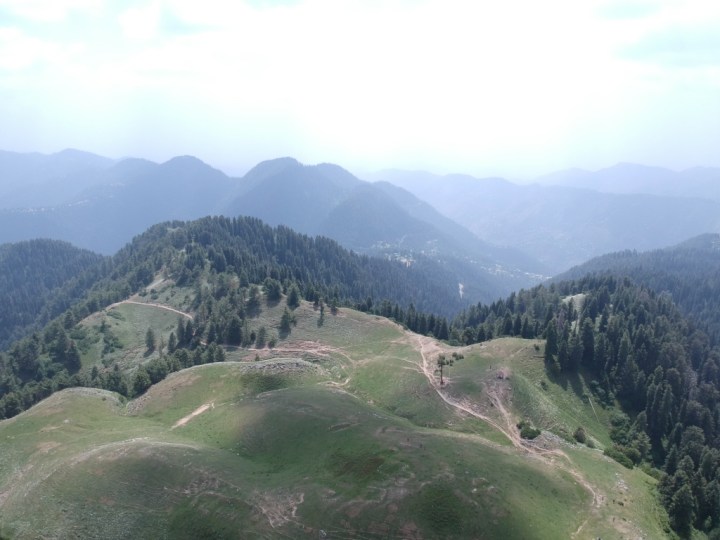 Ariel view of Mukshpuri peak. Downhill Dunga Gali bazar can be seen. Picture taken with DJI Spark.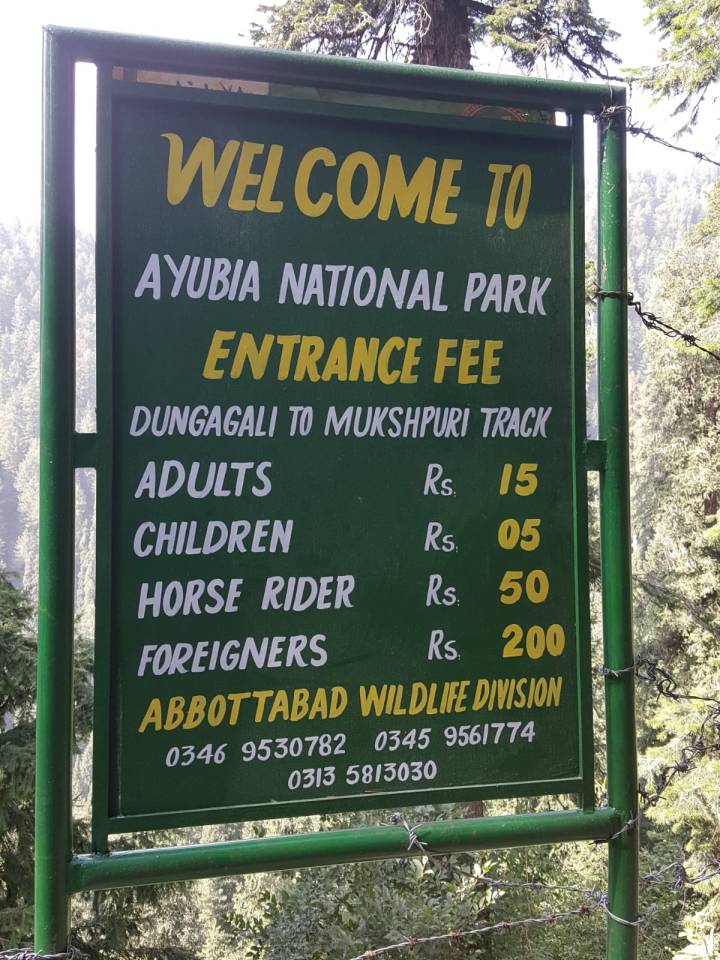

 Shahid Rehan